


In recent years, advancements in technology have revolutionized the field of dentistry, offering innovative solutions for enhanced patient care and treatment outcomes. One such technological advancement is 3D imaging, which has significantly improved the diagnostic capabilities and treatment planning processes in dentistry. By providing detailed three-dimensional images of the oral and maxillofacial structures, 3D imaging enables dentists to accurately assess dental conditions, plan complex procedures, and deliver personalized treatment with precision. In this blog, we will explore the myriad benefits of 3D imaging in dentistry with the help of dentists at The Hershman Group, highlighting its role in improving diagnosis and treatment planning for a wide range of dental issues.
Enhanced Diagnostic Accuracy
Traditional two-dimensional dental X-rays offer limited views of the oral and maxillofacial structures, often leading to challenges in accurate diagnosis, especially for complex dental conditions. 3D imaging, such as cone beam computed tomography (CBCT), provides detailed, cross-sectional images of the teeth, jaws, and surrounding tissues from multiple angles. This comprehensive visualization allows dentists to identify dental pathologies, such as impacted teeth, root fractures, or dental abscesses, with greater precision and accuracy.
Furthermore, 3D imaging enables dentists to detect dental issues that may not be visible on conventional X-rays, such as early-stage cavities or abnormalities in tooth root morphology. By detecting these issues at an early stage, dentists at The Hershman Group implement timely interventions to prevent further progression and preserve oral health.
Precise Treatment Planning
3D imaging plays a crucial role in precise treatment planning for various dental procedures, including dental implant placement, orthodontic treatment, endodontic therapy, and oral surgery. By providing detailed images of the patient’s oral anatomy, 3D imaging helps dentists evaluate bone density, assess anatomical landmarks, and determine the optimal position for dental implants.
For orthodontic treatment, 3D imaging allows orthodontists to visualize the teeth and jaws in three dimensions, facilitating more accurate treatment planning and predicting treatment outcomes. In endodontic therapy, 3D imaging helps dentists identify the root canal anatomy, detect the presence of additional canals, and ensure thorough cleaning and shaping of the root canal system.
In oral surgery, 3D imaging enables oral surgeons to precisely plan and execute procedures such as impacted tooth extraction, bone grafting, and jaw reconstruction. By visualizing the patient’s anatomy in three dimensions, dentists at The Hershman Group minimize surgical risks, avoid damage to adjacent structures, and achieve optimal surgical outcomes.
Reduced Radiation Exposure
One of the significant advantages of 3D imaging in dentistry is the ability to obtain detailed images while minimizing radiation exposure to the patient. Unlike traditional medical CT scans, which emit higher levels of radiation, cone beam computed tomography (CBCT) used in 3D dental imaging delivers lower radiation doses tailored specifically for dental applications.
By using cone-shaped X-ray beams and capturing images in a single rotation, CBCT technology reduces the amount of radiation exposure compared to medical CT scans while still providing high-quality, three-dimensional images. This reduced radiation exposure is particularly beneficial for pediatric patients, pregnant women, and individuals with a higher risk of radiation sensitivity.
Additionally, 3D imaging allows dentists to capture images with a shorter scanning time, further minimizing the patient’s exposure to radiation. This enhanced safety profile makes 3D imaging a valuable tool in dental practice, allowing dentists to prioritize patient safety while obtaining essential diagnostic information.
Improved Patient Communication
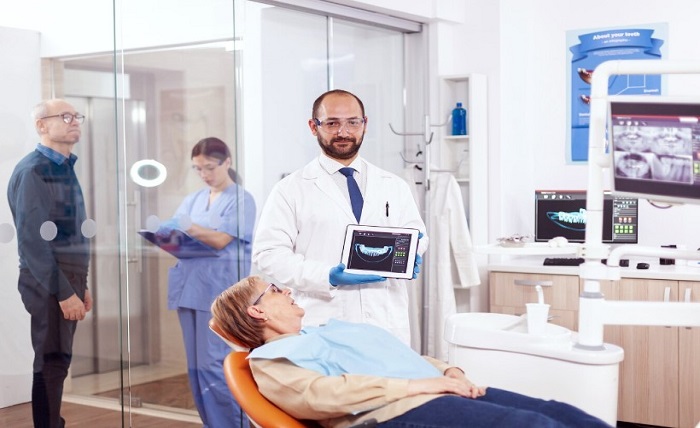
3D imaging enhances patient communication by providing visual representations of dental conditions and treatment plans. By displaying detailed three-dimensional images of the patient’s oral anatomy, dentists at The Hershman Group effectively educate patients about their dental health, discuss treatment options, and address any concerns or questions they may have.
Patients can better understand their dental conditions and treatment recommendations when presented with visual aids, leading to increased treatment acceptance and compliance. Additionally, 3D imaging allows dentists to demonstrate the expected outcomes of dental procedures, helping patients make informed decisions about their oral health care.
Furthermore, 3D imaging enables dentists to collaborate with other healthcare providers and specialists more effectively. By sharing detailed images with referring dentists, oral surgeons, orthodontists, and other specialists, dentists can facilitate interdisciplinary communication and ensure coordinated care for their patients.
Comprehensive Treatment Documentation
3D imaging provides comprehensive documentation of dental conditions and treatment outcomes, serving as valuable records for patient management and follow-up care. By capturing detailed images of the oral anatomy before, during, and after treatment, dentists at The Hershman Group track changes over time, evaluate treatment efficacy, and plan future interventions as needed.
These detailed records also serve as valuable educational tools for dental students, residents, and other healthcare professionals. By reviewing 3D images of various dental conditions and treatment modalities, dental professionals can enhance their understanding of oral anatomy, diagnostic techniques, and treatment principles.
Additionally, comprehensive treatment documentation with 3D imaging facilitates communication with insurance providers and third-party payers. Detailed images and treatment reports can support insurance claims, treatment justification, and reimbursement requests, ensuring that patients receive the coverage they need for necessary dental procedures.
3D imaging technology has transformed the landscape of modern dentistry, offering numerous benefits for improving diagnosis and treatment planning. From enhanced diagnostic accuracy and precise treatment planning to reduced radiation exposure and improved patient communication, 3D imaging has revolutionized the way dentists approach dental care. By leveraging the capabilities of 3D imaging systems, dental professionals can provide personalized, high-quality care while prioritizing patient safety and satisfaction. As technology continues to advance, the future of 3D imaging in dentistry holds exciting possibilities for further innovation and improvement in patient outcomes. Dentists and dental professionals should embrace these advancements and continue to integrate 3D imaging technology into their clinical practice to enhance patient care and elevate the standard of dental excellence.